
How to remove ghost gear?

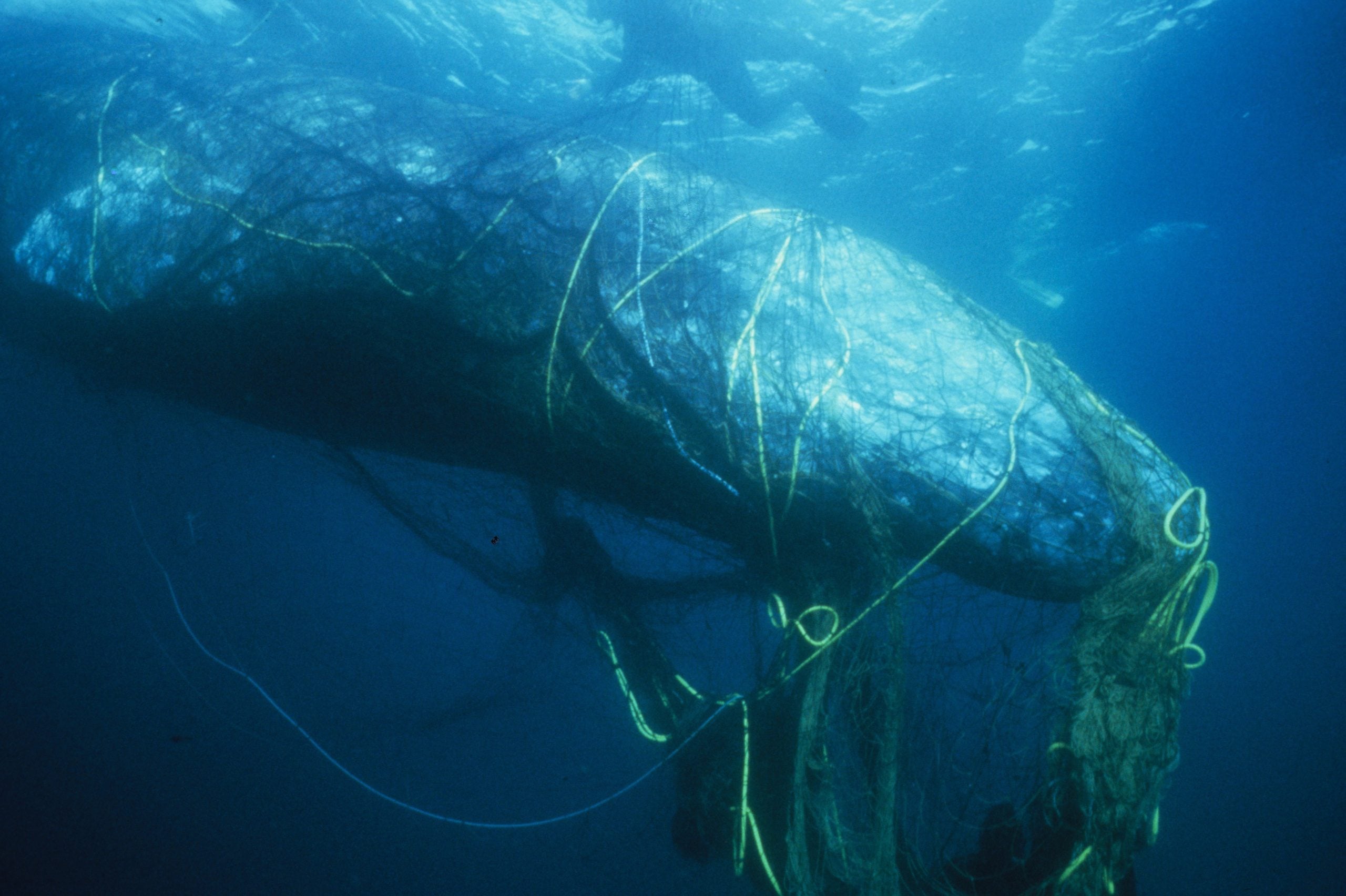
Ghost gear - lost and abandoned fishing gear drifting at sea - is killing whales and dolphins in the most horrific ways. But we’re taking action to stop it.
Thanks to your incredible support, we funded Ghost Fishing UK to head out into the ocean and pull this deadly gear from UK seas before it harms more wildlife. While we wait to hear the results of their retrieval missions, Dr. Phoebe Hudson is here to share what a day in the life as a volunteer diver with Ghost Fishing UK is really like.
Over to Phoebe ...
You only have to see one net catching wildlife to realise the devastation lost or abandoned fishing gear causes.
The first net I ever saw underwater was unforgettable. I was studying in Tasmania and on a dive in my local marine reserve when I came across it. Held up by only a couple of submerged orange juice cartons, the semi-translucent material stretched out further than I could see. In it was marine life galore – sadly, both dead and alive - a mixture of fish, sharks, crabs and lobsters.

The sheer volume and diversity of marine life trapped was shocking enough. But it wasn’t until I tried to free some of these beings, and saw how they fled back into the net for cover, only to be re-entangled, that I truly realised how devastating ghost gear can be.
Now, here I am, six years later and over 10,000 miles away, volunteering with Ghost Fishing UK to address this critical problem.

It’s 6:30 am and I’m on the boat, sipping the first hot chocolate of the day, dive gear loaded and prepped. It’s an early start, but time and tide wait for no one. Yesterday, we surveyed the wreck, gathering as much information as possible. The evening was spent in the pub, and after a lively discussion and exchange of photos and videos, we crafted a detailed plan. Today, we’re here to execute this plan.
Because of your support, Ghost Fishing UK are back out on the water removing deadly ghost gear before it harms more marine life.
Do you want to know what they recovered?
Despite the early rise, the excitement bubbles. A quick dive brief and recap of each team’s aim, and each team member’s role, and we’re off. A moment of quiet ensues – is it the early start, the seasickness or the laser-sharp focus on the task ahead? I’ll never know.


From pub plans to dive checks - today, we put the mission into action.
A call of ‘20 minutes to site’ sees a flurry of activity as all the divers jump into action, donning suits and getting into their kit. A quick top-to-toe check to make sure every team member has everything they need leaves everyone tapping their fins on the deck. With a blast of the boat’s horn, it’s straight in to find the gear.

Once the gear has been relocated, the real task begins. We attach a big pink lift bag to the ghost gear, and fill it with gas. As it inflates, it builds enough tension that the lines can be easily cut. Once cut free, the gear shoots to the surface. For pots, one bag is typically enough to lift them off the seabed. But today, we’re after net - and the worst kind of net: gill net. Almost translucent, even we struggle not to get entangled in it when we know it’s there, never mind unsuspecting marine life.

If the gear is only snagged in a few places and the plan has been executed to perfection, one quick cut through the line of tension is sometimes enough to send it to the surface. But if the gear has been down there a while and the net is all wrapped and twisted, it can take the whole dive to get it free. In these situations, the team take it in turns chopping, making sure nobody gets too tired or out of breath. It’s exhausting work, but each twang of the net brings it one step closer to liberation from the seafloor.

Once the gear is ready to go, it’s off in a flash. Yet in the moment, it feels like slow motion. The overwhelming satisfaction of a job well done kicks in, with fist bumps all around, and then a slow, steady ascent back up to the surface.


Mission accomplished ... almost.
The teams return to the surface, buzzing from the fulfilment of a mission accomplished and eager to share the details. However, the job’s not done yet. The gear still has to be recovered back onto the boat - a task in itself, given how much it can weigh. Everyone chips in to haul it onboard.


Since we’ve retrieved a gill net, the job doesn’t end there. Due to time limits underwater, the focus is on getting the gear to the surface as quickly as possible. Now that we’re back on the surface, we finally have time to save any marine life still trapped. Once again, the team jumps into action - someone sorting through the net to locate entangled individuals, others carefully cutting them free (hopefully avoiding claws!), and someone documenting everything we find. Depending on the gear and how long it’s been catching, this can take anywhere from minutes to hours.
Once we’re back in port, it’s one last team effort to get all the gear loaded into the trailer, ready to be repaired, reused, washed or recycled. Then, at last, we’re all ready to go home - exhausted but satisfied with a job well done.


A job well done.
As the sun sets and the last of the kit is stowed away, I’m left with a sense of rewarding pride and purpose. We may have only recovered a few sections of net on this one day, but the number of lives saved can be in the hundreds - never mind the lives that won’t be trapped in future. I’m grateful to play a small part in the bigger mission: working alongside a dedicated and passionate team at Ghost Fishing UK, helping protect our ocean one dive at a time.

